Modular architecture
Content is organized into clear segments that describe typical operational elements, from data intake to approval checkpoints.
Trelyzonix 3.7 stands as a premium information hub that outlines automation-centric workflows and UI patterns used in financial technology environments. The content highlights modular components, configuration surfaces, monitoring dashboards, and governance rules so readers grasp how these systems are typically assembled.
Trelyzonix 3.7 delivers concise, accessible overviews of the product concepts powering financial services, including data views, control dashboards, and review workflows. The platform emphasizes inclusivity, responsive layouts, and consistent policy navigation across pages.
Content is organized into clear segments that describe typical operational elements, from data intake to approval checkpoints.
Legible typography, keyboard-friendly navigation, and predictable layouts support universal browsing on desktop and mobile.
Policies, privacy notices, and cookie disclosures are linked in a consistent manner to help users locate essential information with ease.
Trelyzonix 3.7 aims to present finance-focused workflow concepts with crisp, objective language that emphasizes clarity, consistency, and transparent governance. The site helps readers grasp common interface elements and operational routines without offering personalized guidance.
Concise paragraphs and scannable cards help readers pinpoint key points quickly.
Descriptions emphasize configuration panels and monitoring routines commonly used in operations.
Policy links and structural layouts remain stable to enable dependable browsing.
Trelyzonix 3.7 embodies practical standards found in financial-services publishing: transparent disclosure paths, precise wording, and emphasis on operational context. The bullets below describe how we shape content creation and page structure.
Text is crafted to inform, focusing on interface patterns and workflow elements.
Policy routing and consent phrasing stay visible and uniform so readers can review essential pages with ease.
Sections emphasize how systems are structured: data views, controls, monitoring, and review milestones.
Pages maintain consistent policy access and encourage careful reading of linked documents.
Designs stack gracefully on smaller screens to minimize horizontal scrolling and friction.
Content is reviewed for consistent terminology, accessible structure, and clear sectional alignment.
Register to unlock extra modules and advanced page layouts.
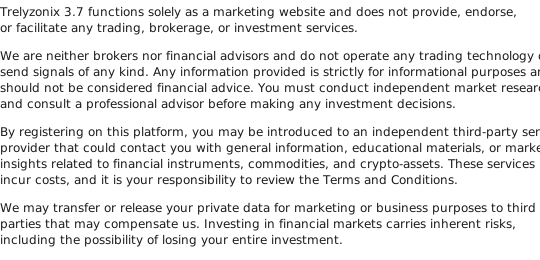
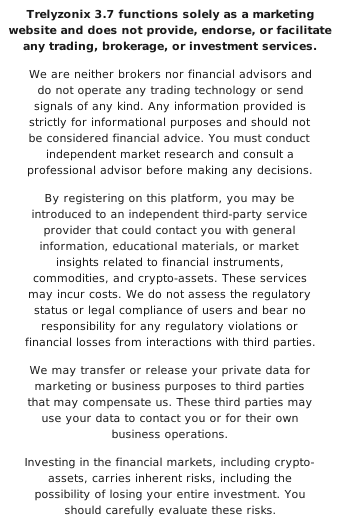
This website functions solely as a marketing platform and does not provide, endorse, or facilitate any trading, brokerage, or investment services.
Read More